
Service details
Procedure details and treatment flow
Echocardiography - ultrasound of the heart with color doppler
Echocardiography (ultrasound of the heart with color doppler) is a completely non-invasive and painless diagnostic method in cardiology, which provides a precise insight into the condition of the heart muscle and blood vessels of the heart.
In our polyclinic in Kragujevac, this examination is routinely performed on the latest generation devices. With a two-dimensional ultrasound display on the screen, we get an image of the heart in different sections, while the color doppler method allows us to accurately measure blood flow, which makes this examination the gold standard in cardiology.
When examination is necessary and risk factors: Echocardiography is indispensable in assessing the condition of patients with suspected cardiovascular diseases or an already established diagnosis.
The examination is recommended for people with high blood pressure, irregular or accelerated heart rate, chest pain, rapid fatigue, episodes of loss of consciousness, as well as for diabetics and patients undergoing chemotherapy or radiotherapy. It is also extremely important as a preventive measure for people with high risk factors (obesity, smoking, elevated blood fats, physical inactivity and genetic predisposition).
What the examination reveals and the importance of color doppler
Heart ultrasound with color doppler and new technical possibilities provides the doctor with a huge amount of vital information about the very mechanics and structure of your heart.
Structural parameters of the heart:
- Dimensions of heart cavities: Measurement of the size of the atria and ventricles.
- Heart muscle (myocardium): Determination of wall thickness and analysis of its mobility.
- Ejection Fraction (EF): A key parameter that shows the pumping power of the heart.
- Pericardium: An insight into the condition of the heart's envelope and the presence of possible fluid.
Importance of Color Doppler option:
While standard ultrasound gives an image of the structure, color doppler technology shows the movement of the blood.
This option allows direct insight into the blood flow rates through the cardiac orifices, checking the function of the heart valves (whether they leak blood backwards or are narrowed) and is crucial for diagnosing any congenital or acquired heart defects.
The course of inspection and the frequency of controls
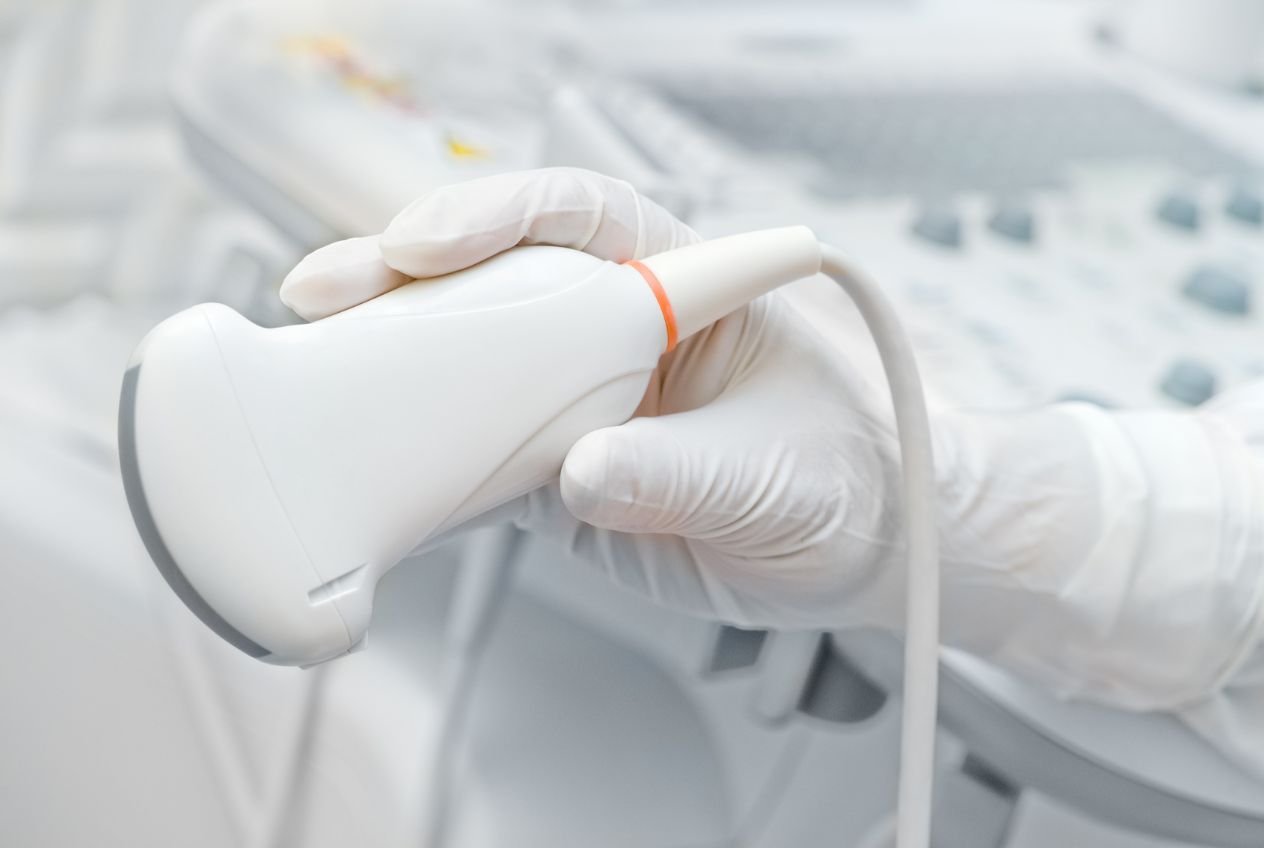
Ultrasound of the heart is performed with the patient lying comfortably on the left side during the examination, with the left arm bent at the elbow and placed under the head. The doctor applies a little gel to the ultrasound probe and gently passes it over the skin on the left side of the chest. At the same time, the patient he feels absolutely no pain. The examination lasts on average from 20 to 30 minutes, after which an oral explanation and a written medical report are immediately received.
Ultrasound methods, including echocardiography, are completely harmless and without any harmful effects (radiation) on the patient, which is why they can be repeated an unlimited number of times without any risk.
The time until the next examination is determined by the cardiologist solely on the basis of the findings. In the event of a normal finding, a routine check-up can be scheduled for one or more years. In the case of a pathological finding, controls are scheduled much earlier - in one or more months, in order to adequately monitor the progression of the condition and the effect of therapy.