
Service details
Procedure details and treatment flow
Color doppler of the main arteries of the neck
Color doppler of the main arteries of the neck is a completely painless and non-invasive ultrasound diagnostic method that examines the arteries that supply the brain with blood, while accurately measuring the flow rate through them.
This method allows us to clearly see what the carotid and vertebral arteries on the neck look like, what is their width and patency, what is the degree of atherosclerosis (that is, the "age" of the arteries) and what is the quality of blood flow to the brain.
In our polyclinic in Kragujevac, this examination is routinely performed on state-of-the-art devices, providing patients with a quick, safe and highly reliable assessment of the condition of the blood vessels.
Stroke prevention: The greatest importance of this examination lies in the early detection of narrowing (stenosis) or blockage of blood vessels in the neck due to the accumulation of plaque.
Timely detection of these changes is the most important step in risk assessment and prevention of stroke, especially in patients with associated cardiovascular diseases.
Indications and to whom examination is recommended
The examination is recommended both for people who already feel certain neurological or vascular disorders, as well as for people without any complaints, but with the presence of risk factors.
Symptomatic patients:
People who feel some of the following complaints:
- Weakness, tingling or numbness in the arms and legs
- Pronounced dizziness and a feeling of instability
- Crises of consciousness and unconsciousness
- Sudden visual disturbances
- Concentration and memory disorders
- Persistent and pronounced headaches
Asymptomatic patients:
People who have no complaints, but have some of the following conditions:
- Risk factors (genetics, high blood pressure, diabetes, high fat, obesity, smoking)
- Audible murmur over carotid arteries (detected by stethoscope)
- Pulsating tumefactions or sustained neck trauma
- Coronary and peripheral arterial disease
- Monitoring already known narrowings (stenosis greater than 20%) or condition after carotid surgery (first ultrasound 30 days after intervention)
What the examination looks like and the frequency of controls
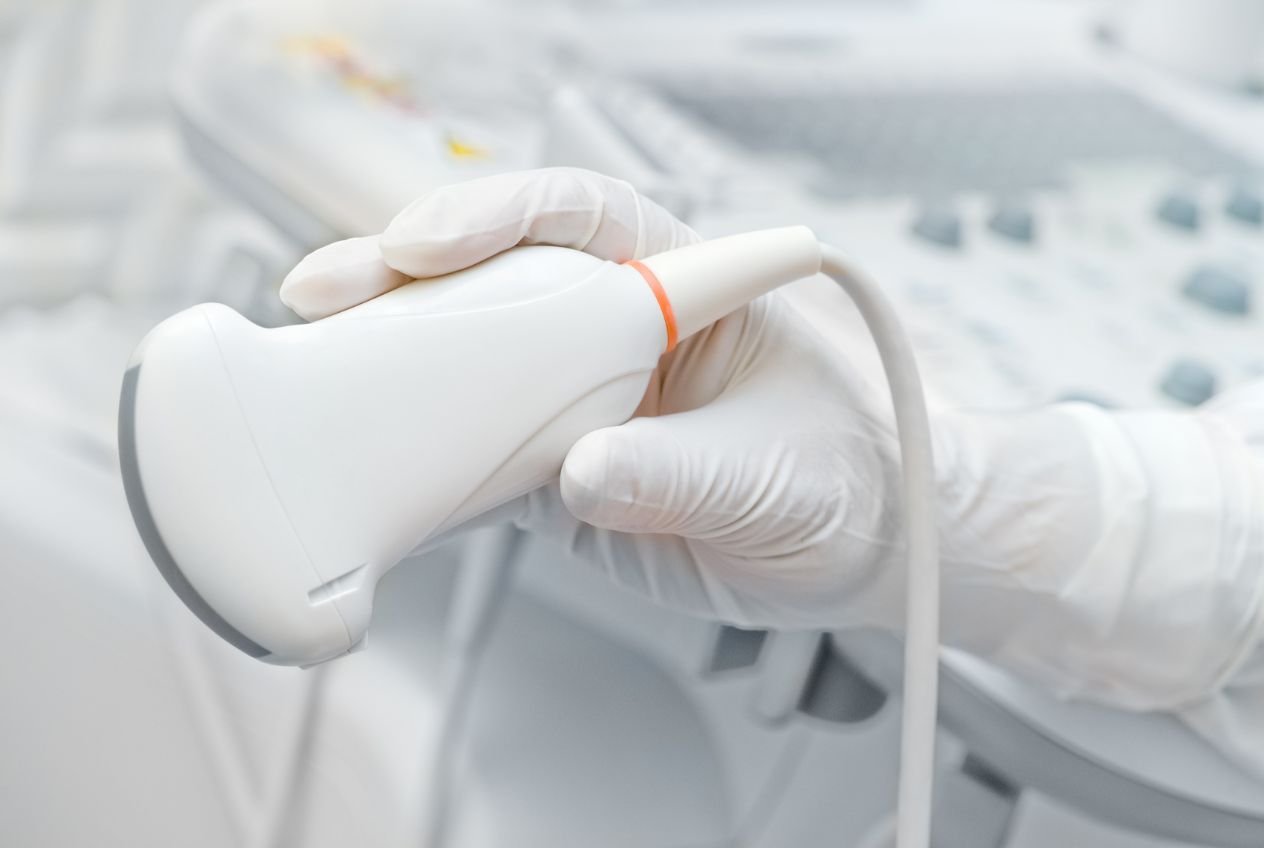
The examination is performed with the patient lying comfortably on his back with his head slightly tilted back. The doctor gently passes the probe of the ultrasound machine, on which he previously applied a little contact gel, over the skin of the neck. The examination itself it lasts from 10 to 20 minutes, during which the patient feels absolutely no pain or discomfort, and immediately afterwards receives a verbal explanation and a detailed written report.
Like all other ultrasound methods used in diagnostics, color doppler is completely safe and there are no adverse effects (of radiation) to the patient, which is why it can be repeated an unlimited number of times.
The time until the next examination is determined by the doctor solely based on the findings. In the case of normal findings, routine control is advised for 1 to 3 years, while in the case of pathological findings (observed plaques and narrowing), controls are scheduled for a month, or for several months to monitor the progression of the disease.