
Service details
Procedure details and treatment flow
Sclerotherapy represents a proven and widely applied method for the treatment of capillaries, reticular veins and selected superficial venous changes. The procedure is performed by injecting a sclerosing agent into the treated blood vessel, thus causing its closure and gradual withdrawal.
This method is most often used when the changes are visible to the naked eye, but in appropriate indications it can also be used on deeper veins. The goal is to act precisely on the altered blood vessel, while preserving the surrounding healthy structures.
The solution can be applied in liquid form or as a foam, depending on the type and extent of the changes. Choice concentrations and techniques are adapted to the findings, ultrasound assessment and individual characteristics of the patient.
Ultrasound guided sclerotherapy
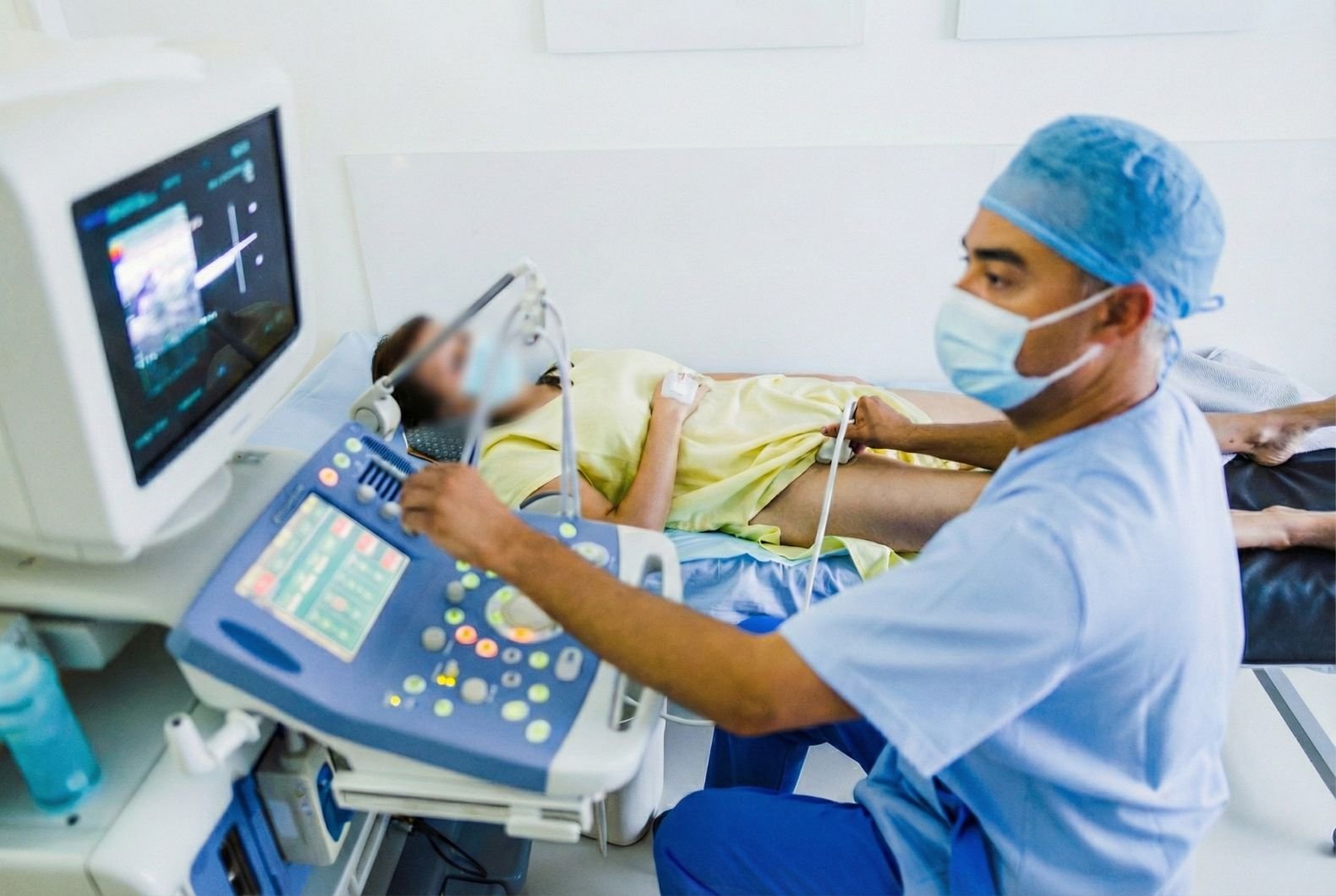
When the veins are deeper and are not clearly visible on the surface of the skin, ultrasound-guided sclerotherapy is used. During the procedure, ultrasound enables precise monitoring of the position of the needle and the movement of the sclerosing agent, which additionally increases the safety and effectiveness of the treatment.
In more complex cases, venous reflux is first solved by laser ablation or another appropriate method, and then sclerotherapy is included as the final step in the treatment plan.
Foam treatment is applied at
- varicose veins of legs and arms
- reticular veins and prominent capillaries
- selected hemangiomas and vascular changes
- more complex superficial venous anomalies
Advantages of the method
- without surgical incisions and without scars
- minimal discomfort during the treatment
- quick return to daily duties
- the possibility of staged and targeted treatment
Disadvantages and possible side effects
As with any medical procedure, there are expected temporary reactions that the doctor explains in advance to the patient. Most often, these are mild bruises, transient hyperpigmentation, a feeling of tightness or a minor inflammatory reaction along the length treated veins.
- bruising that subsides in the following weeks
- transient skin color change at the treatment site
- itching, burning or mild sensitivity
- superficial vein inflammation in rare cases
Most of these phenomena are transient and disappear during recovery. This is precisely why the therapy and control plan is adapted to each individual to the patient individually, with clear instructions after the intervention.