
Service details
Procedure details and treatment flow
Hemodialysis approaches
For patients with chronic renal failure who require hemodialysis, ensuring adequate and reliable vascular access is the most important step in treatment.
The hemodialysis approach is often called a "lifeline" in medicine, as it enables safe and effective blood purification using a dialysis machine. Creating this approach is a delicate surgical procedure that requires high expertise and precision of the vascular surgeon.
In our polyclinic, we provide a complete service - from preoperative ultrasound imaging and planning, through the surgical intervention itself, to postoperative monitoring and resolution of possible complications.
The importance of timely planning: The best form of vascular access is an arteriovenous (AV) fistula. Considering that it needs time to "ripen" (usually 4 to 6 weeks) before it can be used, it is extremely important that the surgical procedure is planned and performed several months before the expected start of dialysis.
Types of hemodialysis approaches
The type of access that will be created depends solely on the condition of the patient's blood vessels, his general health and the urgency of starting dialysis.
Arteriovenous (AV) fistula:
This is the gold standard in hemodialysis. The patient's artery and vein are connected surgically, usually on the forearm.
The advantages of the AV fistula are multiple: it has the longest lifespan, carries the lowest risk of infection and clot formation (thrombosis), and at the same time allows the best blood flow necessary for high-quality dialysis.
Arteriovenous (AV) graft:
When the patient's veins are not of suitable diameter or quality to create a fistula, a synthetic tube (artificial blood vessel or graft) is used to connect the artery and vein under the skin.
An AV graft is ready for use much faster than a fistula (often after two to three weeks), but requires more careful monitoring by a specialist.
Preparation and course of intervention
It is absolutely mandatory before any intervention ultrasound (Color Doppler) examination, that is, "mapping" of the blood vessels of the hands. In this way, the vascular surgeon precisely evaluates the diameter, patency and quality of the arteries and veins, in order to choose the most ideal place for access.
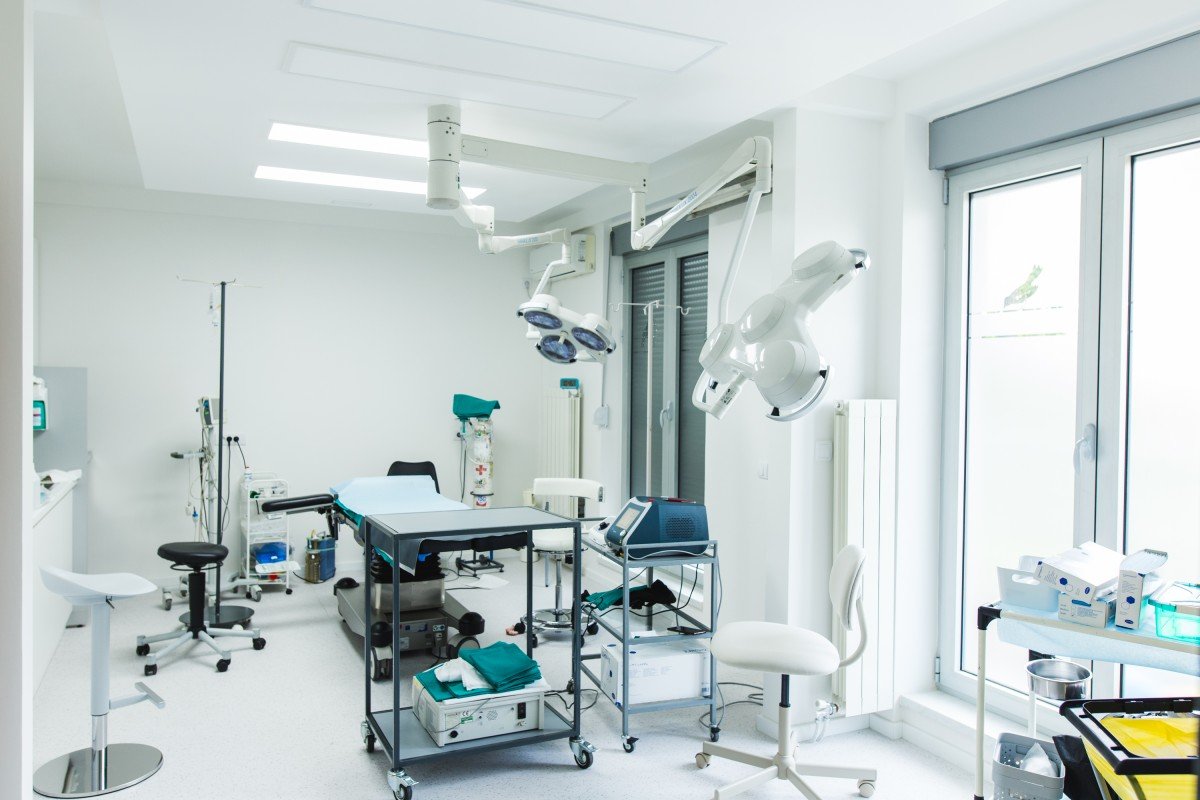
The actual surgical intervention of AV fistula creation or graft implantation is most often performed in local anesthesia, which is extremely important for the comfort of patients with kidney failure. The intervention lasts a short time, and the patient goes home the same day.
In addition to creating new ones, our team of vascular surgeons also successfully deals with the "rescue" of existing, poorly functioning fistulas (resolving stenoses, thrombosis and aneurysms), in order to ensure the smooth continuation of dialysis for patients.